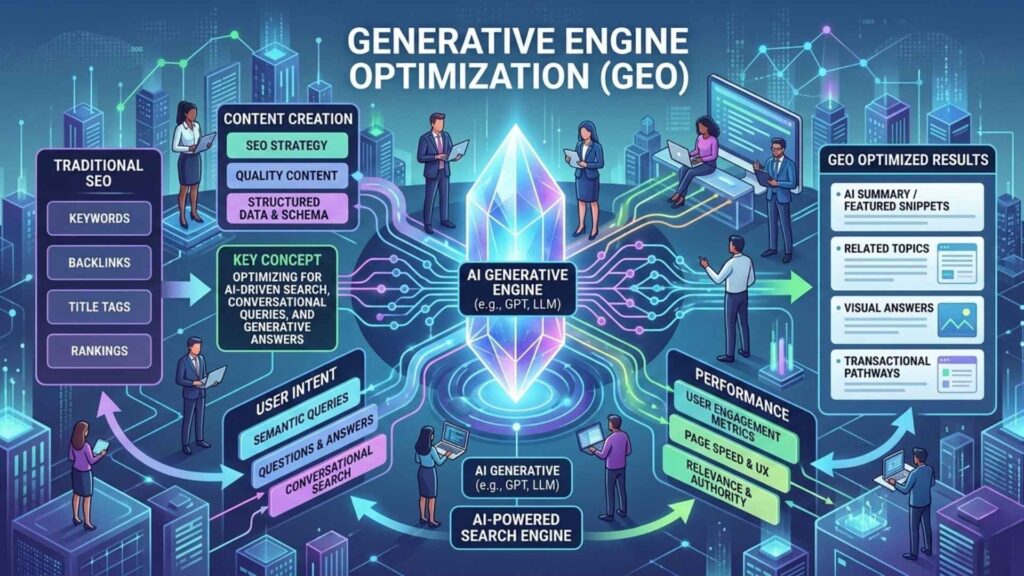
What Is Generative Engine Optimization (GEO)? Complete 2026 Guide
Search engine optimization is entering a new phase driven by artificial intelligence. Traditional SEO focused on ranking web pages, but modern search engines now generate answers directly using AI systems, This transformation has introduced a new concept known as Generative Engine Optimization (GEO). According to Google Search Central, helpful and people-first content is a key factor in modern search visibility. GEO represents the next evolution of SEO — optimizing content so AI systems can understand, generate, and recommend your information inside AI-powered search results. If you already understand Google AI Overview and AI SEO fundamentals, GEO becomes the natural next step in mastering modern search optimization.
Before diving deeper into Generative Engine Optimization, it is important to understand how AI search works at a foundational level. If you are new to AI-powered search, read our complete Google AI Overview SEO Guide to understand how modern search engines generate answers.
What is Generative Engine Optimization (GEO)?
Generative Engine Optimization refers to optimizing content for AI-driven search engines that generate responses instead of simply listing websites. Industry research published by Search Engine Journal highlights the rapid growth of AI-powered search systems. Unlike traditional SEO, GEO focuses on becoming a trusted data source for AI models.
Simple definition:
👉 GEO is SEO designed for AI-generated answers.
To better understand the evolution of search strategies, you should also explore our detailed comparison on AI SEO vs Traditional SEO, where we explain how search optimization has shifted in the AI era.
Why GEO Matters in 2026
Search behavior has changed.
Users now expect:
instant answers
conversational results
summarized information
personalized responses
AI engines analyze multiple sources and generate one intelligent response.
Websites optimized for GEO have a higher chance of being referenced.
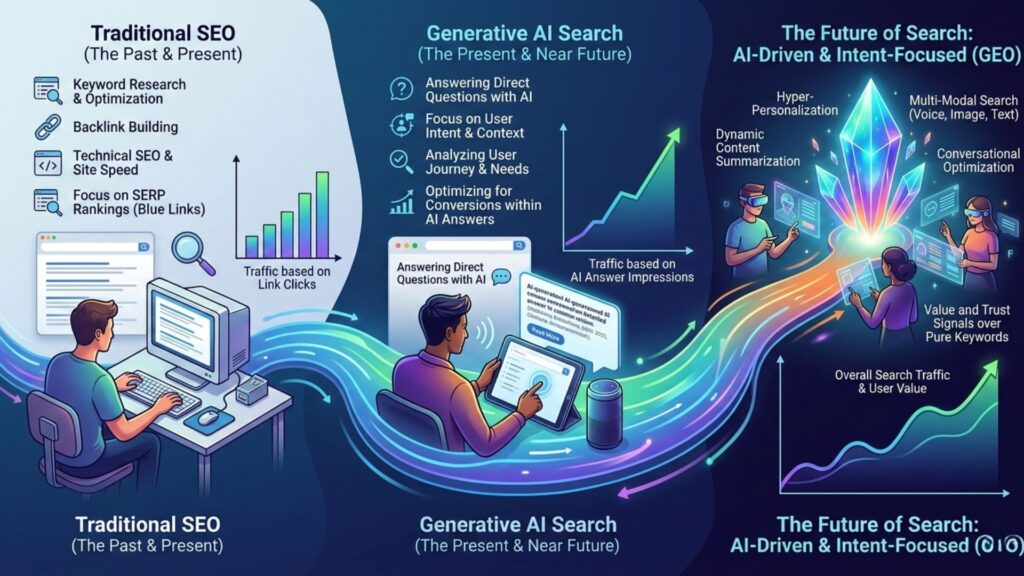
Difference Between SEO and GEO
| Traditional SEO | GEO |
|---|---|
| Optimize pages | Optimize knowledge |
| Keywords focus | Context focus |
| Ranking links | AI answer inclusion |
| Backlinks priority | Authority signals |
GEO expands SEO rather than replacing it.
If you’re still unsure about the fundamentals of AI-generated summaries, our beginner guide on What is Google AI Overview explains how Google selects and displays AI answers.
How Generative AI Search Works
AI search engines:
Understand query intent
Analyze trusted sources
Generate summarized responses
Cite relevant websites
Content clarity becomes more important than keyword repetition.
Writing structured content is a core part of GEO. Learn step-by-step techniques in our guide on How to Write Content for Google AI Answers.
Core Principles of GEO
1. Topic Authority
Publish connected articles around one subject.
2. Structured Content
Use headings, lists, and FAQs.
3. Clear Definitions
AI extracts definitions easily.
4. Helpful Information
Educational content performs best.
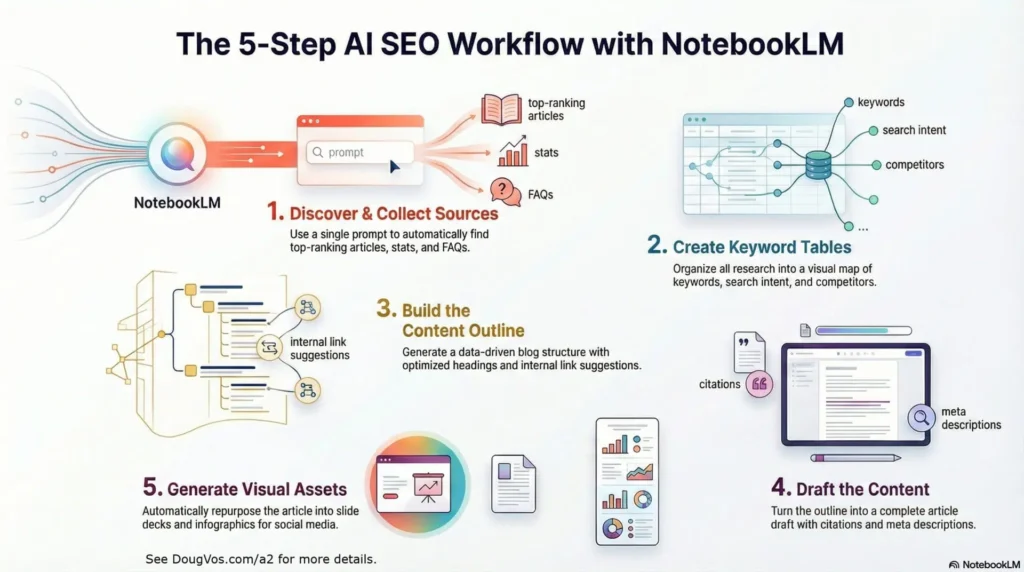
The Complete Guide to GEO Strategy Topic Clusters & AI SEO Explained
Generative Engine Optimization (GEO) is the future of search in the AI-driven world. This guide explains how a smart GEO Content Writing Strategy helps your content appear in AI-powered search results. You’ll also learn the important role of Topic Clusters in building authority and improving visibility. Finally, we break down the difference between GEO vs AI SEO so you can choose the right strategy for 2026 and beyond.
Common AI Search Ranking Mistakes
While Generative Engine Optimization (GEO) focuses on optimizing content for AI-generated search results, many websites still struggle because of common optimization errors. In our guide AI Search Ranking Mistakes: 15 Errors That Stop You From Appearing in Google AI Results (2026 Guide), we explain the most common mistakes that prevent content from appearing in AI search.
Benefits of Generative Engine Optimization
✅ Higher visibility in AI search
✅ Long-term organic traffic
✅ Future-proof SEO strategy
✅ Authority recognition
Common GEO Mistakes
❌ Writing shallow content
❌ Ignoring internal linking
❌ Publishing unrelated topics
❌ No structured headings
Future of SEO with GEO
Between 2026–2030:
AI assistants dominate search
Voice queries increase
Personalized results expand
Generative answers become default
Websites optimized today will lead tomorrow.
How to Implement Generative Engine Optimization on Your Website
Implementing Generative Engine Optimization requires a structured and strategic approach. Instead of publishing random content, website owners must build a connected ecosystem of knowledge.
Start by identifying one primary topic and creating a detailed pillar guide. Then, publish supporting articles that answer related questions and link back to the main guide. This creates a topical authority structure that AI systems can easily recognize.
Next, focus on clarity. Use short paragraphs, clear headings, definitions, and FAQ sections. AI systems prefer well-organized information blocks rather than long unstructured text.
Consistency also matters. Updating content regularly signals freshness and reliability to search engines.
Finally, combine traditional SEO fundamentals such as internal linking and technical optimization with GEO principles. This hybrid approach ensures maximum visibility in both traditional and AI-generated search environments.
Studies shared in the HubSpot SEO Guide also confirm that AI-driven search is transforming digital marketing strategies.
Frequently Asked Questions
Is GEO replacing SEO?
No, GEO extends SEO into AI-powered environments.
Can small blogs use GEO?
Yes. Niche authority often outperforms large websites.
Do keywords still matter?
Yes, but context and knowledge depth matter more.
Conclusion
Generative Engine Optimization represents the future direction of search engines powered by artificial intelligence.
Bloggers who build structured knowledge, topical authority, and helpful educational content will thrive in the generative search era.