Google AI Search Is Changing SEO Faster Than Most Websites Realize
How AI-powered search experiences are reshaping rankings, visibility, and content strategy for modern websites.
Google AI Search is shifting the digital landscape from traditional for years, SEO followed a familiar pattern. Websites published content, optimized keywords, built backlinks, and waited for rankings to improve. The Google AI Search system was never easy, but it was predictable enough for creators, businesses, and marketers to understand how visibility worked online.
That version of SEO is starting to change much faster than many websites expected.
Google’s AI Search recent push toward AI-powered search experiences is creating a completely different environment for publishers. Features like AI Overviews, conversational search, and Gemini integration are transforming how users interact with information. Instead of clicking through multiple websites, people are increasingly getting direct answers inside Google itself.
This shift is becoming one of the biggest moments in modern SEO.
Many websites still focus on traditional ranking strategies while Google Search quietly evolves into an AI-driven discovery platform. The problem is not that SEO is disappearing. The problem is that visibility itself is changing. And many websites are not fully prepared for it yet.
Businesses that understand how AI search works are already gaining visibility. Using the right AI tools directory can help brands discover solutions that improve content quality and search performance.
Recent Google I/O announcements revealed how AI Overviews and advanced search capabilities are becoming a central part of the search experience.
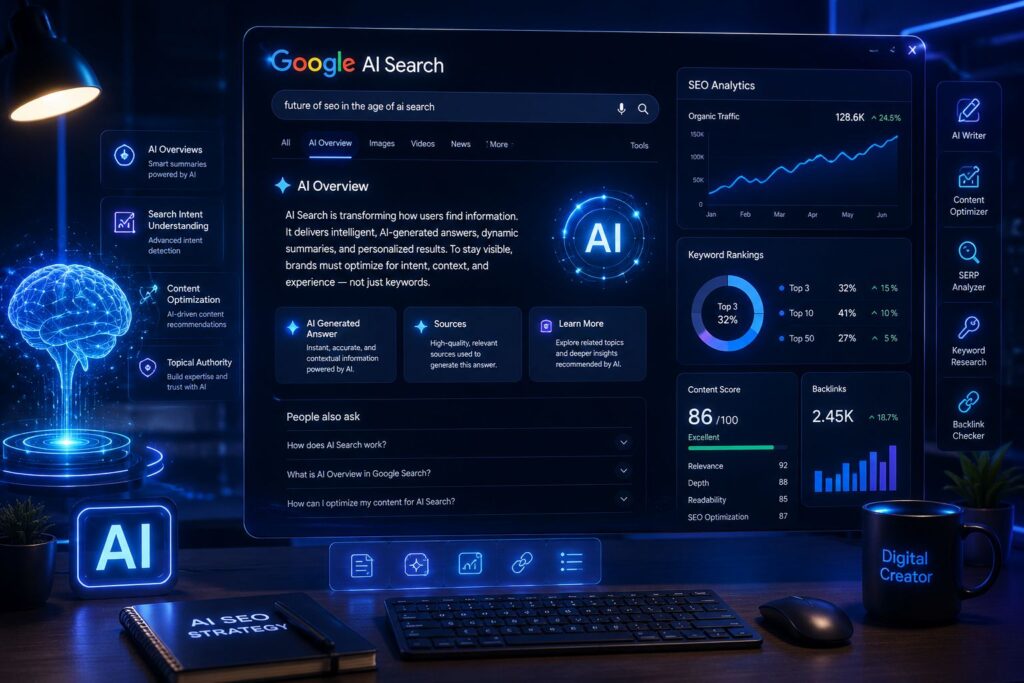
Google AI Search Is No Longer Just a Search Engine
Traditional Google Search was built around links. Users typed keywords, Google ranked pages, and websites competed for clicks. The entire SEO industry grew around that model.
Now things are moving in a different direction. Google is becoming more conversational, more predictive, and more AI-focused. During Google I/O, the company showed how deeply artificial intelligence is being integrated into Search. Users can now ask longer and more natural questions while Google generates summarized responses directly inside results. This changes how people search online. Instead of opening five different articles to understand a topic, users may now get quick AI-generated explanations instantly. That creates a better experience for users in some situations, but it also creates uncertainty for publishers that depend on search traffic. Many creators are starting to realize that rankings alone may not guarantee visibility anymore.
A website could still rank highly and receive fewer clicks if Google’s AI systems answer the user’s question directly inside Search. That is why AI search matters so much for the future of SEO.
Google regularly shares updates about AI Search, AI Overviews, and search innovations through the Google Blog, making it one of the most reliable sources for understanding upcoming changes in search.
AI Overviews Are Reshaping Website Visibility
One of the clearest examples of this shift is AI Overviews.
These AI-generated summaries appear directly in search results and attempt to answer user questions without requiring multiple clicks. While Google still links to sources, the user experience changes significantly because information is now being condensed and summarized by AI. This creates a new challenge for websites. In the past, ranking first often meant strong traffic potential. Today, even top-ranking websites may lose clicks if users already receive enough information from AI-generated summaries. This is where the idea of AI visibility becomes important. Traditional SEO focused heavily on rankings. AI visibility focuses on whether your brand, content, or expertise appears inside AI-powered experiences. That difference is becoming increasingly important. Google’s systems are no longer just ranking pages. They are also selecting which sources deserve visibility inside AI-generated answers. That means authority, trust, clarity, and expertise matter more than ever before. Websites that consistently publish valuable and reliable content may have a stronger chance of appearing in these AI-driven experiences.
According to guidance published on Google Search Central, websites should focus on creating helpful, people-first content rather than optimizing solely for search engines.
Why Many Websites Are Falling Behind
One of the biggest problems right now is that many websites are still optimizing for an older version of Google. They continue publishing generic keyword-focused articles designed mainly for rankings instead of readers. In previous years, that strategy often worked reasonably well. But AI search changes the value of average content. Artificial intelligence can already generate basic informational content at massive scale. That means generic articles are becoming easier to replace. If a website publishes the same recycled information found everywhere else, Google’s AI systems may simply summarize that information directly in search results. This creates a difficult situation for websites producing low-value content. The internet is becoming flooded with AI-generated articles that sound technically correct but lack real perspective, depth, or experience. Readers notice it. Search engines notice it too. That is why original insights matter more now.
The websites that may perform best in the future are not necessarily the ones publishing the most content. Instead, they may be the ones publishing the most trustworthy and useful content.
SEO Is Becoming More About Trust
One of the most important changes happening right now is the growing importance of trust.
Google has spent years talking about quality, authority, and expertise through concepts like EEAT. AI-powered search experiences make those ideas even more important because AI systems need reliable sources to generate accurate responses. This means websites need stronger identities. Anonymous content farms and random AI-generated blogs may struggle more over time if they cannot demonstrate real expertise or authority. On the other hand, creators who consistently explain topics clearly and build strong topical authority may benefit from the new direction of Search. Many people still think SEO is mostly about keywords. Keywords still matter, but modern SEO is becoming more connected to credibility, usefulness, and recognition. That is why branding matters more now too.
If users trust your website, search for your brand directly, and engage with your content across multiple platforms, Google receives stronger signals that your content has value.
The future of SEO may belong to websites that feel more human and more trustworthy.
Modern SEO teams are adopting AI SEO tools to analyze search intent, identify content gaps, and optimize pages for AI-powered search experiences.
Zero-Click Search Is Growing Faster
Another major trend reshaping SEO is zero-click search. This happens when users find answers directly on Google without visiting another website. Featured snippets started this trend years ago, but AI-generated summaries are accelerating it significantly.
For publishers, this creates understandable concerns. Many websites depend heavily on organic traffic for growth, advertising revenue, or lead generation. If fewer users click through search results, some traditional traffic models may become weaker.
However, this does not mean websites are becoming irrelevant.
People still need detailed analysis, unique perspectives, tutorials, reviews, case studies, and trusted expertise. AI-generated answers often summarize information, but users still look for depth when making decisions or learning complex topics. This creates an important opportunity for creators. Websites that focus on originality, expertise, and useful insights may still build strong visibility even in an AI-first search environment.
The key difference is that creators now need to think beyond rankings alone.
What Creators and Businesses Should Focus on Now
The websites adapting fastest to AI search are usually the ones focusing on authority instead of shortcuts.
This means creators should stop chasing random traffic and start building deeper expertise in specific areas. For example, a website consistently publishing strong content around AI SEO, AI visibility, and future search trends may build stronger authority than a generic blog covering dozens of unrelated topics. Topical depth matters more now. Creators should also focus on publishing content that feels genuinely useful for humans. Clear explanations, practical insights, expert opinions, and real examples are becoming more valuable than thin keyword-focused articles. Another important shift is multi-platform visibility. Google is no longer the only place where discovery happens. Platforms like YouTube, LinkedIn, Medium, Reddit, newsletters, and social media all contribute to brand recognition and authority signals. The creators who build visibility across multiple platforms may become more resilient as search evolves. This is one reason why personal brands and niche authority websites are growing rapidly right now.
The Future of SEO Will Look Very Different
The future of SEO may not revolve around rankings in the same way it once did.
Search is gradually becoming more conversational and AI-driven. Users increasingly ask complete questions instead of typing fragmented keywords. Google then attempts to generate direct answers using multiple trusted sources. This changes the role websites play in discovery. In many cases, visibility inside AI-generated systems may become just as important as traditional rankings. That means creators need to think about how their content is understood, trusted, and referenced by AI systems. The transition is still happening, but the direction is becoming clearer. Google wants Search to feel more like an intelligent assistant and less like a directory of links. That creates challenges for websites still relying on outdated SEO strategies. At the same time, it creates opportunities for creators willing to adapt early. Many businesses still underestimate how quickly these changes are happening. They continue treating SEO like a technical checklist instead of a broader visibility strategy. That mindset may become risky over the next few years.
Understanding current AI technology trends can help businesses prepare for the next generation of search experiences.
Final Thoughts
Google AI Search is not destroying SEO, but it is transforming the way visibility works online. The websites that continue depending entirely on old ranking strategies may struggle as AI-generated search experiences become more common. Meanwhile, creators who build authority, publish useful insights, and focus on human-first content may gain long-term advantages. The future of SEO will likely reward trust more than volume.
It will reward expertise more than repetition. And it may reward creators who understand visibility beyond simple rankings. Search is changing faster than many websites realize. The businesses and creators that adapt early could be the ones leading the next era of online discovery.
As Google AI Search continues to evolve, businesses should regularly explore AI tools that can help improve content quality, automation, and online visibility.
Frequently Asked Questions (FAQs)
What Is Google AI Search and How Does It Impact SEO?
Google AI Search uses artificial intelligence to generate direct answers and summaries for users. This shift changes how websites gain visibility because ranking alone is no longer enough. Websites now need high-quality, trustworthy, and well-structured content to appear in Google AI Search results.
Why Is Google AI Search Changing SEO Faster Than Traditional Search?
Google AI Search analyzes user intent more deeply and provides AI-generated responses directly on the search results page. As a result, SEO strategies focused only on keywords are becoming less effective, while topical authority, content quality, and user experience are becoming more important.
How Can Websites Optimize Content for Google AI Search?
To optimize for Google AI Search, websites should create helpful content, answer specific user questions, use clear headings, include expert insights, and demonstrate experience and authority. Structured content increases the chances of being featured in AI-generated answers.
Does Google AI Search Reduce Organic Website Traffic?
Google AI Search can reduce clicks for some informational queries because users may find answers directly in AI Overviews. However, websites that provide unique insights, expert opinions, and in-depth content can still attract qualified traffic and improve visibility.
What Are the Best SEO Practices for Google AI Search in 2026?
The best SEO practices for Google AI Search include creating people-first content, improving page experience, building topical authority, earning quality backlinks, optimizing for conversational queries, and regularly updating content to maintain relevance.
Can Small Websites Compete in Google AI Search Results?
Yes, small websites can compete in Google AI Search results by publishing accurate, original, and highly relevant content. Google AI Search often prioritizes content quality and usefulness over website size, giving smaller publishers opportunities to gain visibility.
Is Google AI Search Replacing Traditional SEO?
Google AI Search is not replacing SEO, but it is changing how SEO works. Businesses and publishers must adapt by focusing on content quality, expertise, and user intent rather than relying solely on traditional keyword optimization techniques.
How Important Is E-E-A-T for Google AI Search?
E-E-A-T (Experience, Expertise, Authoritativeness, and Trustworthiness) plays a significant role in Google AI Search. Content that demonstrates real expertise and provides reliable information is more likely to be referenced in AI-generated search responses.