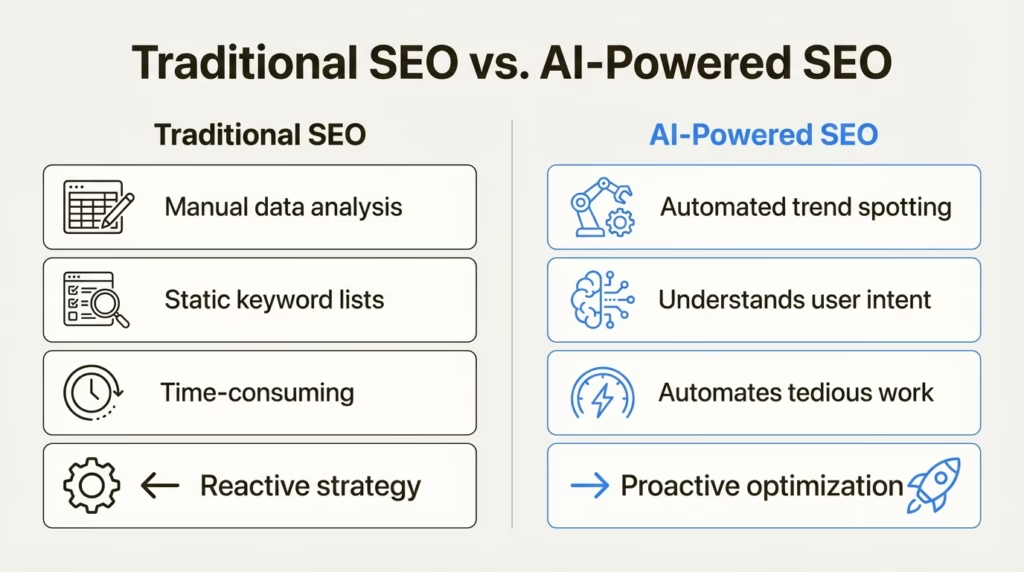
AI SEO vs Traditional SEO: Key Differences Explained (2026 Guide)
Search engine optimization has evolved dramatically over the last decade. For years, website ranking depended on backlinks, keywords, and technical optimization. However, the rise of artificial intelligence has introduced a completely new approach known as AI SEO.
In 2026, Google search results are increasingly powered by AI systems such as Google AI Overview, conversational search models, and machine learning algorithms that understand context rather than just keywords.
Because of this transformation, many bloggers and marketers now ask:
Is traditional SEO still relevant, or has AI SEO replaced it?
This guide explains the complete difference between AI SEO vs Traditional SEO, how search engines are changing, and how you can adapt your strategy to remain competitive.
If you are new to AI search concepts, you should first read our detailed explanation of What is Google AI Overview and how AI-powered search works. According to Google Search Central, modern search ranking focuses on helpful and people-first content.
Want a deeper understanding of how to optimize content for AI-driven search? Explore our complete guide on Generative Engine Optimization (GEO) for 2026.
AI SEO vs Traditional SEO
AI SEO uses artificial intelligence tools to analyze data, predict trends, and automatically optimize content faster and smarter.
Traditional SEO relies on manual keyword research, backlink building, and human-driven optimization strategies.
While Traditional SEO focuses on fixed ranking factors, AI SEO adapts quickly to algorithm changes and user intent.
AI SEO vs Traditional SEO
What is Traditional SEO?
Traditional SEO refers to optimization techniques used before AI-driven search systems became dominant.
It focuses primarily on ranking webpages using measurable signals such as keywords and backlinks.
AI SEO vs Traditional SEO
Core Elements of Traditional SEO
Keyword optimization
Backlink building
Technical SEO improvements
Meta tags and headings
Page speed optimization
Mobile friendliness
The main goal was simple:
👉 Rank higher in search results.
Search engines analyzed pages based mostly on keyword relevance and authority signals.
How Traditional SEO Works
Traditional SEO follows a predictable process:
Keyword research
Content optimization
Link building
Indexing
Ranking improvement
Google’s earlier algorithms relied heavily on matching keywords with user queries.
Although these methods still matter, they are no longer sufficient on their own.
If you’re new to Google AI Overview, it’s important to understand how content gets selected for AI-generated answers. In our detailed guide on How to Write Content for Google AI Answers (2026 Complete Guide), we explain practical strategies to structure your content so it has a higher chance of appearing in AI responses.
What is AI SEO?
AI SEO represents the next generation of search optimization.
Instead of optimizing only for algorithms, AI SEO focuses on helping artificial intelligence systems understand content meaning, expertise, and usefulness.
AI search engines analyze:
Context
User intent
Content quality
Expertise signals
Topic authority
AI SEO aims to make your website a trusted knowledge source, not just a keyword-optimized page.
How AI SEO Works
AI-powered search evaluates information differently.
Modern AI systems:
Understand natural language
Analyze entire topics
Compare multiple sources
Generate summarized answers
This is why content now appears inside AI-generated summaries rather than only traditional rankings.
For a complete strategy, read our Google AI Overview SEO Guide.
Industry experts at Search Engine Journal explain that AI-powered search is reshaping traditional SEO strategies.

AI SEO vs Traditional SEO — Key Differences
| Factor | Traditional SEO | AI SEO |
|---|---|---|
| Focus | Keywords | Intent & Context |
| Ranking Goal | Page ranking | Answer inclusion |
| Content Style | Optimized text | Helpful explanations |
| Strategy | Individual pages | Topic clusters |
| User Experience | Click-based | Answer-based |
| Algorithm | Rule-based | Machine learning |
AI SEO does not replace traditional SEO completely it enhances it.
Why AI SEO Is Growing Rapidly
Several technological changes drive AI SEO growth:
AI Overview search results
Voice search assistants
Conversational queries
Personalized search experiences
Users now search like they speak.
Example:
Old search:
best SEO tools
New search:
What are the best SEO tools for beginners in 2026?
AI understands intent behind queries.
Benefits of AI SEO
1. Higher Visibility
Content can appear inside AI answers.
2. Better User Experience
Clear explanations improve engagement.
3. Long-Term Authority
Topic expertise builds sustainable rankings.
4. Future-Proof Strategy
AI search will dominate coming years.
Limitations of Traditional SEO Today
Traditional SEO struggles because:
Keyword stuffing no longer works
Backlinks alone are insufficient
Users expect instant answers
AI summaries reduce click dependency
Websites must evolve.
AI SEO
Traditional SEO
AI Search SEO
AI SEO strategy 2026
Future of SEO 2026
AI Search Optimization

How Bloggers Should Adapt in 2026
To succeed in modern search:
Build topical authority
Publish connected articles
Answer real user questions
Use structured formatting
Provide educational value
Instead of writing random posts, create a complete knowledge ecosystem.
AI SEO Content Writing Framework
Ideal AI-friendly article includes:
Clear introduction
Definitions
Step guides
Examples
Comparison tables
FAQs
Internal links
AI systems easily extract answers from structured content.
Future of SEO (2026–2030)
Search engines will move toward:
AI assistants
Voice-driven search
Personalized results
Predictive answers
Websites focusing on education rather than manipulation will win.
Role of Internal Linking in AI SEO
Internal links connect related knowledge.
Example structure:
Pillar Article
↓
Cluster Articles
↓
Supporting Guides
This helps Google understand expertise depth.
Common Mistakes Bloggers Make
❌ Writing short AI-generated content
❌ Ignoring topic clusters
❌ No internal linking
❌ Keyword stuffing
❌ Publishing inconsistent topics
FAQs
Is AI SEO replacing traditional SEO?
No. AI SEO builds upon traditional SEO principles but focuses more on context and helpful content.
Can beginners use AI SEO?
Yes. Beginners benefit most because AI rewards clarity over authority.
Do backlinks still matter?
Yes, but content understanding now plays a bigger role.
Conclusion
The debate between AI SEO vs Traditional SEO is not about replacement but evolution.
Traditional SEO built the foundation, while AI SEO defines the future.
Bloggers who combine structured content, topical authority, and helpful explanations will dominate Google search in the AI era.
Research published by HubSpot SEO Guide also highlights how AI search optimization is becoming essential for modern websites.