Google Launches Core Update Amid I/O AI Search Overhaul
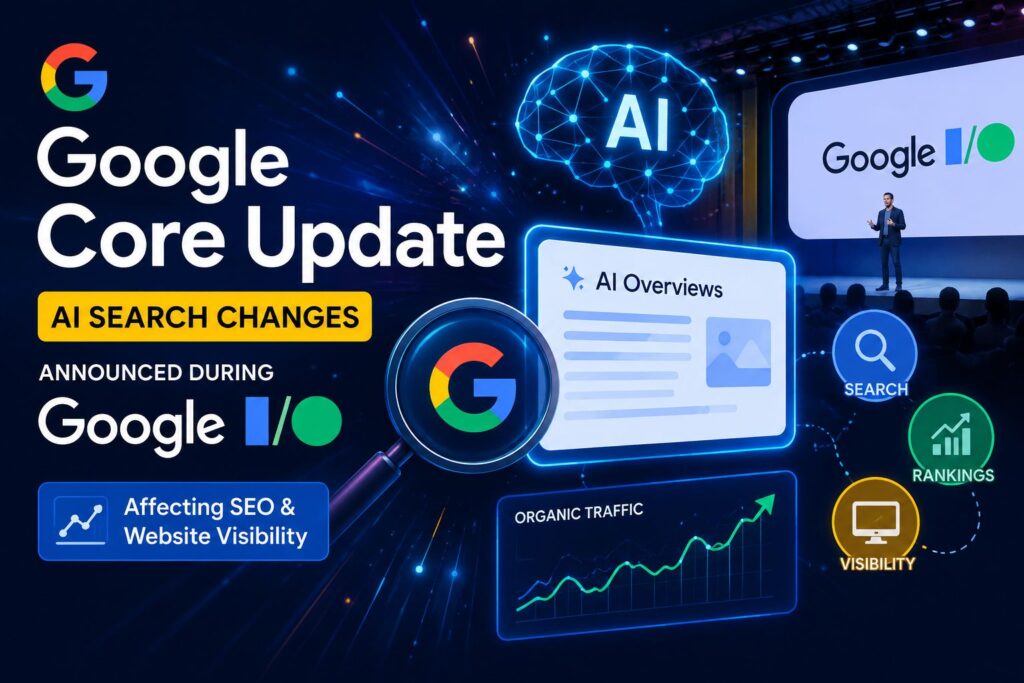
Google has launched another Core Update, but this time the timing feels different. The update arrived right after Google I/O, where the company introduced major changes to Search powered by AI. Google Core Update for many people in SEO, blogging, and content creation, this does not feel like a normal ranking update. It feels like the beginning of a larger shift in how visibility google core update works on the internet.
For years, website owners focused on rankings, backlinks, and keyword optimization. The goal was simple: appear on the first page of Google Core Update and get clicks. But after the latest Google I/O announcements, Search is starting to look less like a list of links and more like an AI-powered assistant. That is why this Google Core Update matters more than usual. Google is no longer only improving rankings. It is rebuilding the search experience itself. AI Overviews, conversational search, and Gemini-powered answers are changing the relationship between users and websites. The biggest question now is not whether SEO is dead. The real question is whether websites can stay visible in an AI-first search environment. This Google Core Update is important because it shows where Google is heading next.
To understand AI search better, read these topics: 3 Layers of AI Visibility
Google is continuously evolving its search system through AI-driven updates and new ranking models.
Learn more from official sources: Google I/O official page
Google I/O Changed the Direction of Search
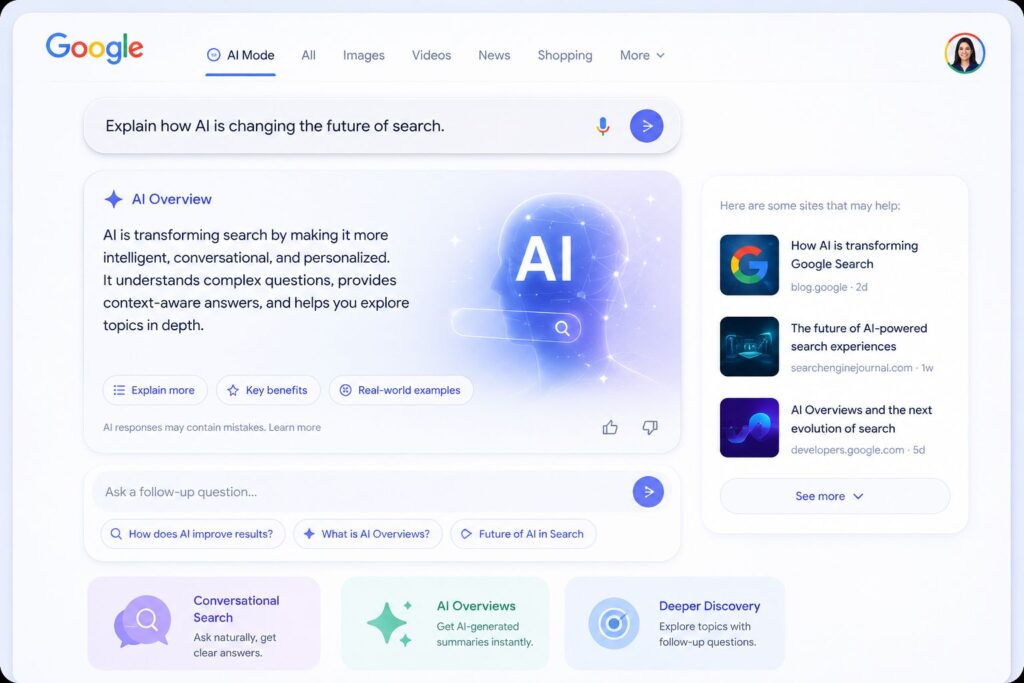
At Google I/O, the company made it clear that AI is becoming the center of Search. Instead of only showing traditional blue links, Google Core Update is now giving users AI-generated answers directly inside search results. This creates a faster and more conversational experience for users, but it also changes how traffic moves across the web. Google introduced deeper AI integrations through Gemini and expanded AI Overviews in Search. Users can now ask longer questions, follow up naturally, and receive summarized answers without opening multiple websites and focus on Google Core Update. For users, this may feel more convenient. Google Core Update for creators and publishers, however, it creates a new challenge. If Google answers more questions directly, fewer users may click on websites. That means many blogs that depend on organic traffic could see major changes over time. This is why the latest Google Core Update feels connected to the larger AI search transformation. Google is not only ranking websites anymore. It is deciding which information deserves visibility inside AI-generated experiences. Google Core Update that changes everything.
These changes are officially supported and explained by Google in their documentation and updates. You can check the details here: Google Search Central
Why This Core Update Feels Bigger Than Previous Updates
Most Google Core Updates focus on improving search quality. Some websites gain rankings while others lose visibility. Usually, the conversation stays around content quality, spam, backlinks, and technical SEO. This time, the discussion is different. The update arrived during a moment when Google is redesigning the future of Search itself. That means the impact is not only about rankings. It is also about how users discover information online.
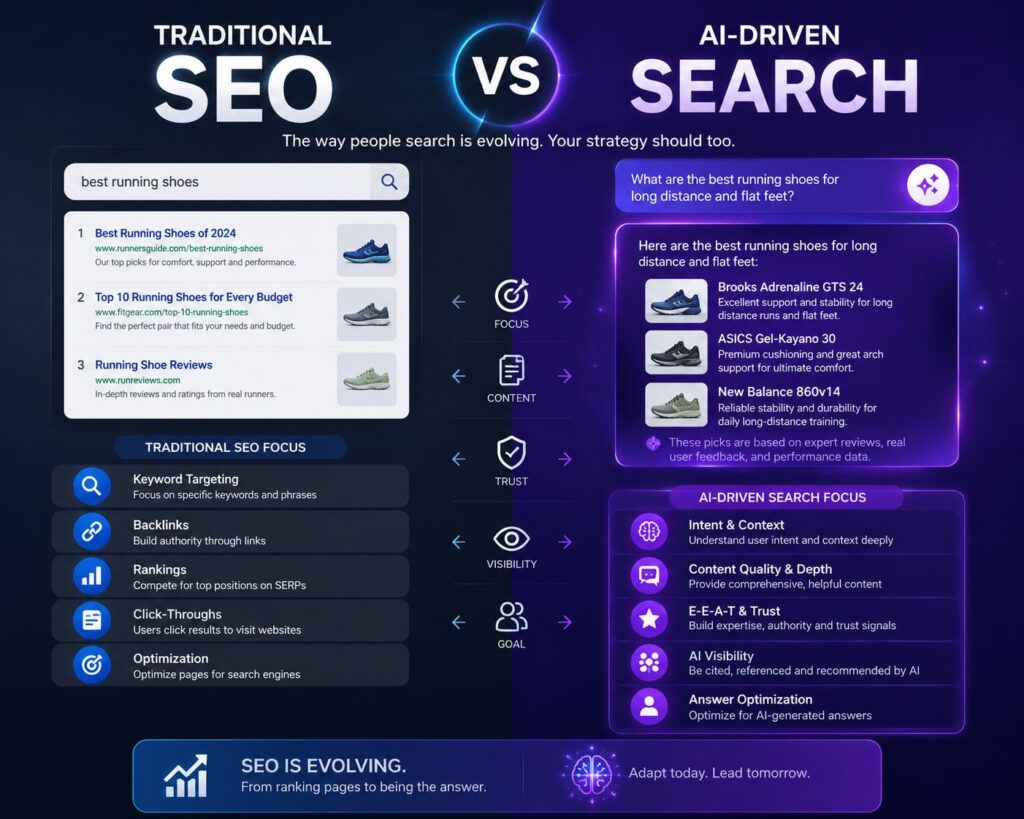
For years, SEO strategies focused heavily on clicks. If your website ranked well, traffic followed naturally. But AI search changes that model because Google may answer the question before the user visits any website. Google Core Update this creates what many people now call a “zero-click internet.” In some cases, users may still visit websites for deeper information. But quick informational queries could increasingly stay inside Google’s own interface. That means publishers now have to think beyond rankings alone. Visibility is becoming more important than position. A website ranking first may still lose clicks if Google’s AI summary satisfies the user immediately. That is one of the biggest shifts happening right now in SEO.
SEO Is Not Dead, But It Is Evolving Fast
Every time Google changes Search, people say SEO is dying. The same thing happened during mobile-first indexing, voice search, featured snippets, and previous algorithm Google core updates. SEO is not disappearing after Google I/O either. What is changing is the type of content Google wants to trust. Generic content is becoming weaker. Mass-produced AI articles without insight may struggle more over time because AI-powered search systems need reliable, original, and trusted information sources. Google now seems more focused on authority, expertise, usefulness, and brand trust than ever before. That means creators who only chase keywords may face problems in the future. On the other hand, creators who build real authority around a topic may benefit from the new direction of Search. This is where AI visibility becomes important Google core update system. In the past, ranking on page one was often enough. Now websites need to become trusted sources that AI systems want to reference, summarize, and surface inside conversational search experiences. That requires a different mindset.
AI search is changing SEO. It is explained in more detail in our related articles.
The Rise of AI Visibility
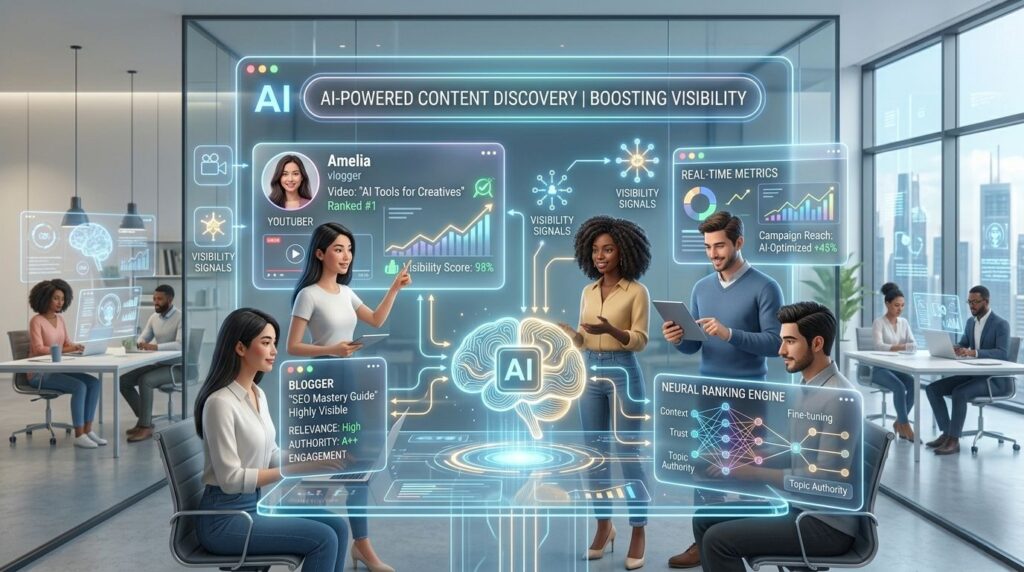
One of the biggest ideas emerging after Google I/O is AI visibility. Traditional SEO focused heavily on search rankings. AI visibility focuses on how often your content, brand, and expertise appear across AI-powered systems.
This includes:
- AI Overviews
- Conversational search
- AI-generated recommendations
- Summarized answers
- Multi-platform authority
- AI Search
- AI Overviews
- Future of SEO
- Google Core Update
Websites that consistently publish useful and trustworthy insights may have a better chance of appearing in these environments. This is especially important for creators and small publishers. Many websites still focus only on publishing keyword-heavy blog posts without building any real topical authority. That strategy may become weaker as Google moves deeper into AI-driven search experiences. Creators now need to think more like publishers and experts instead of content machines. Google core update system the websites that survive the AI search transition will likely be the ones that build recognizable authority in their niche.
👉 Google confirms AEO & GEO are still part of SEO, not a replacement.
What this Means for Bloggers and Small Websites
Small bloggers often worry most during Google Core Updates because traffic changes can directly affect income, visibility, and growth. The latest Google core update changes may feel intimidating, especially for independent creators. But this transition also creates opportunities. Large websites still move slowly. Independent creators can adapt faster.
Smaller publishers now have a chance to build niche authority in emerging areas like AI search, AI SEO, creator tools, productivity workflows, and digital education. Instead of competing broadly, creators should focus deeply. A website that consistently explains one topic clearly may become more valuable than a generic site covering everything.
For example, a website focused specifically on AI visibility, AI search optimization, and creator-focused SEO could build stronger authority than a general “AI tools” blog publishing random content daily. That is why niche positioning matters more now.
Google’s AI systems will likely reward clarity, consistency, and expertise over volume alone.
- AI-powered search
- Zero-click search
- AI SEO
- Search rankings
- Google algorithm update
- Future of Google Search
- SEO trends 2026
- Google core update
AI is reshaping SEO and affiliate marketing strategies in 2026.
👉 How AI Is Changing SEO and Affiliate Marketing in 2026
The Biggest Risk Is Generic Content
One of the clearest signals from recent Google core updates is that generic content is becoming easier to replace. AI tools can now generate thousands of average articles quickly. That means average content is losing value. If a blog simply repeats information already available everywhere else, Google’s AI systems may summarize that information directly without needing the original article. This is why creators should stop focusing only on publishing more content. Publishing better content matters more. Real examples, unique opinions, practical experience, original analysis, and future-focused insights are becoming increasingly valuable. Readers also notice the difference.
Human-written content usually feels more natural because it includes perspective, emotion, context, and real understanding. Robotic content often sounds repetitive and empty even when it is technically correct. That is why creators should use AI carefully instead of depending on it completely. AI can support research and workflows, but real authority still comes from human insight and google core update system.
What Content Creators Should Do Now
The future of SEO will likely belong to creators who combine expertise with adaptability.
The first step is building topical authority. Instead of writing random articles across dozens of subjects, creators should focus on becoming trusted in a specific area.
The second step is improving content quality. This means writing articles that explain trends clearly, offer useful analysis, and help readers understand what changes actually mean google core update.
The third step is building a recognizable brand.
- AI visibility
- SEO after Google I/O
- Google AI Mode
- Google Core Update
- Google I/O SEO
- Google core update
In an AI-first search environment, brand trust may become even more important than before. If users recognize your website, they are more likely to search for it directly, follow your updates, and trust your insights. Creators should also think beyond Google alone.
Traffic sources like Medium, LinkedIn, YouTube, Quora, newsletters, and social platforms may become more important as search behavior evolves. Multi-platform visibility creates stronger long-term stability. This does not mean websites are disappearing. It means creators need broader visibility strategies.
AI advertising performance depends heavily on data quality and optimization systems. This is closely explained in our related article:
👉 Why Your AI Ad Strategy Is Only As Good As Your Data
The Future of Search Is Becoming Conversational
Google’s direction is becoming clearer after I/O. Search is moving toward conversations instead of simple keyword matching. Users increasingly ask complex questions instead of typing short search phrases. AI systems then generate summarized answers using multiple information sources. This changes how content should be written. Articles designed only around keyword stuffing may struggle. Content written clearly for humans may perform better because conversational AI systems prioritize understanding and usefulness.
The future may reward websites that explain topics naturally, deeply, and clearly.
That is why creator-friendly writing matters. Simple explanations, structured ideas, and practical insights may become stronger signals in AI-driven discovery systems.
Google Core Update May 2026
Google’s latest broad rollout is the May 2026 Core Update, which officially started on May 21, 2026. The Google Core Update May 2026 is expected to take around two weeks to fully roll out across all languages and regions. This Google Core Update May 2026 follows the March 2026 core update and the February 2026 Discover update, bringing further changes to search rankings and website visibility.
For more official updates and future announcements, follow Google’s latest sources:
Final Thoughts
Google launching a Google Core Update during its major AI search expansion is not a coincidence.
It reflects a larger transition happening across the internet.
Search is evolving from link discovery into AI-powered information experiences. That creates uncertainty for many creators, but it also creates new opportunities for websites willing to adapt early. SEO is not ending after Google I/O. But visibility is changing faster than many people expected. Google core update the websites that continue relying on outdated strategies may struggle over time. Meanwhile, creators who build authority, publish original insights, and focus on human-first content may become more valuable in the AI era.
The next generation of successful websites may not be the ones publishing the most content.
They may be the ones creating the most trusted content.
And in the age of AI search, trust could become the most important ranking factor of all.